8 Key Executive Assistant Goals for 2026
August 13, 2026

The 8 key executive assistant goals for 2026 are: master calendar and schedule management, strategic communication and stakeholder management, project and initiative coordination, executive-level research and insight synthesis, financial and budget management support, people operations and culture leadership, Chief of Staff and strategic advisory functions, and systems thinking and operational optimization. Written as business outcomes and measured with clear KPIs, they move an EA from tactical support to strategic partner.
Your executive is living in a constant stream of meetings, Slack pings, and half-finished decisions, and the calendar keeps getting more crowded instead of more useful. As the EA, you're not there just to keep the day moving, you're there to protect focus, reduce friction, and create advantage. That's why executive assistant goals need to be written as business outcomes, not a to-do list. Start with the practical view from a goal-planning lens in the Fluidwave goal planning guide, then build a career path that moves from tactical support to strategic partnership.
Calendar management is where most EAs prove they can think like operators. The weak version of this goal is “book meetings quickly.” The strong version is protect executive time, reduce conflicts, and shape the week around decision-making, not just availability.
For nearshore teams, this gets more demanding because you're often coordinating across U.S. time zones and GMT-3 coverage at the same time. That means the calendar can't just be full. It has to be intentional, with overlap windows for live collaboration and protected blocks for deep work, prep, and recovery. A practical example is blocking 9 to 11 a.m. daily for focus work, then clustering internal meetings into a single window so the executive doesn't spend the whole day context-switching.
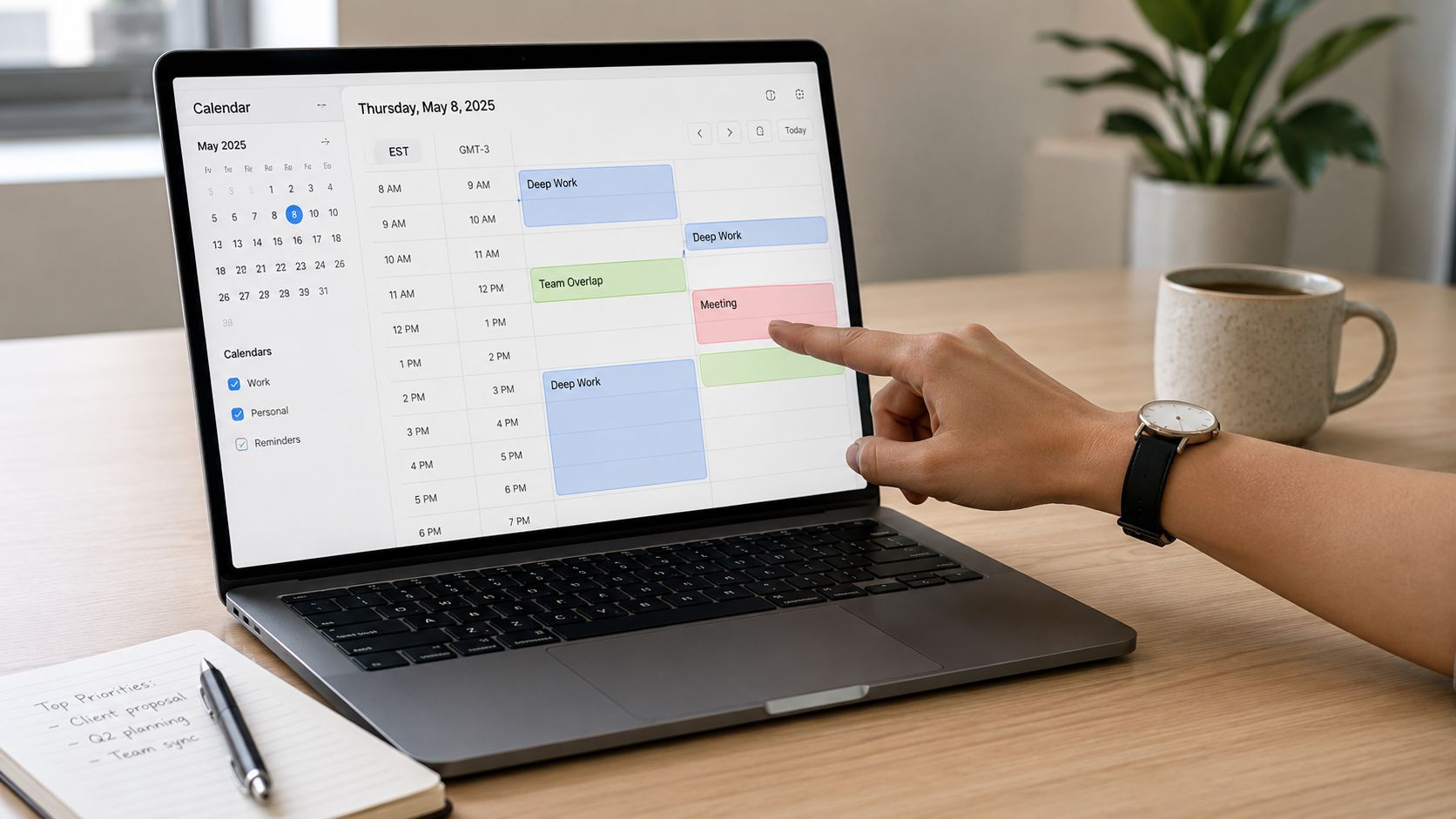
Use tools like Calendly, Fantastical, and Google Calendar's time-zone display to create guardrails. Set a rule that meetings can't be booked back to back, and force a 15-minute buffer between high-stakes conversations. That's especially useful before fundraising calls, board prep, or customer escalations, where the executive needs time to reset and absorb notes.
Practical rule: If a meeting doesn't need the executive live, it shouldn't block prime focus time.
A useful KPI framing here is simple and concrete. One executive-assistant KPI framework shows how delegated work can translate into reclaimed executive time, with 10 delegated tasks a week at 30 minutes each reclaiming 5 hours per week, and it also tracks outcomes like 48 of 50 tasks on time = 96% and 40 booked with 1 correction = 97.5% ExecViva's executive assistant KPI framework. Those numbers matter because the goal isn't “calendar maintenance.” The goal is executive bandwidth.
A strong EA also prepares the meeting, not just the invite. Send agendas, pre-reads, and context 24 hours in advance, then build in a 10 to 15 minute debrief window after critical meetings so notes, actions, and follow-ups don't disappear.
The best EAs don't just move information around, they shape how it lands. That means filtering noise, drafting with the executive's voice, and knowing when a message needs clarity versus when it needs escalation.
The role expands from support into influence. You're dealing with board members, investors, vendors, direct reports, and cross-functional partners, each with a different communication style and tolerance for ambiguity. For bilingual LATAM professionals, the advantage is even sharper because you can bridge not only language but also tone, urgency, and cultural expectation.
One practical example is inbox triage. Virtustant's own EA guidance highlights inbox triage as a delegated task, with messages sorted into act, read, and archive queues, plus draft replies prepared for review. That's the right model for a fast-moving executive because it doesn't just reduce volume, it increases decision quality.
Create a simple style guide that mirrors the executive's preferences. Keep templates for recurring messages, such as weekly updates, board follow-ups, and vendor outreach. Then maintain a stakeholder map that notes who needs updates, how often they need them, and what channel they prefer.
You'll also want to protect the executive from avoidable misunderstandings. If a message could create tension between HQ and a distributed team, surface it early with context and a recommended response. That's especially important when the executive is balancing investor communication, internal morale, and external brand consistency.
The practical KPI is not how many emails you touch. It's whether stakeholders feel informed, responses are timely, and the executive spends less time rewriting messages that should've been clear the first time. One industry summary notes that the EA role is moving into broader strategic support, and the KPI guide above points toward outcomes such as executive time reclaimed, resolution time, calendar accuracy, on-time delivery, and stakeholder satisfaction Executive Assistant Institute statistics, ExecViva's KPI guide.
For teams handling high-volume email, it also helps to study efficient Gmail workflows and turn recurring communication into a repeatable operating system.
An EA who can run a project earns trust fast. The work starts as coordination, then becomes ownership of the small decisions that keep a launch, offsite, or strategic initiative from sliding off track.
The key is to think in workstreams, not tasks. A product launch, annual planning cycle, office relocation, or fundraising process all have dependencies, deadlines, and stakeholders who assume someone else is watching the details. If you're the EA on point, you need to track those moving parts before they become blockers.
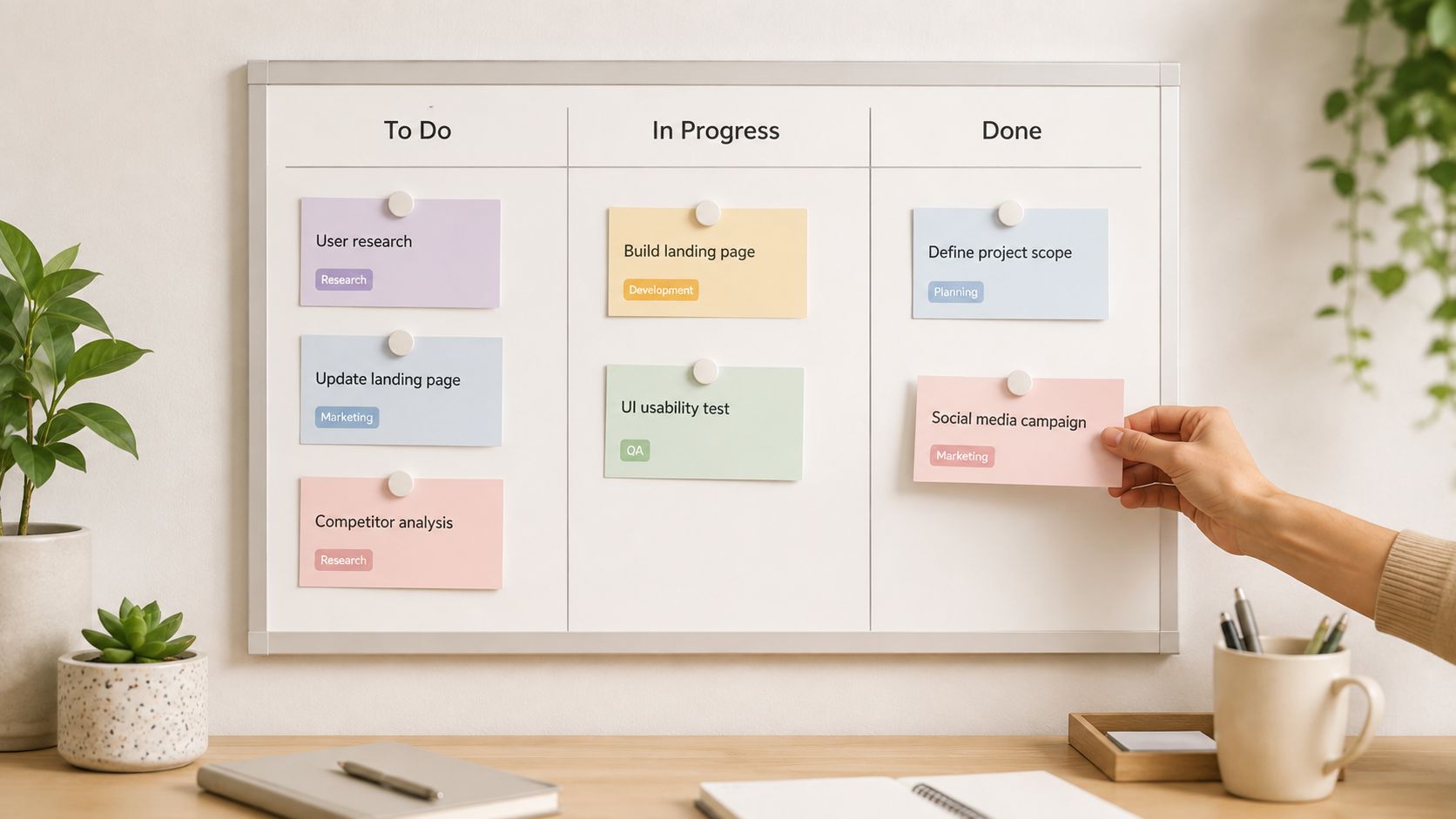
Use a project system like Asana, Monday.com, or Notion with clear owners and deadlines. Add a RACI for anything cross-functional so no one can hide behind vague accountability. A weekly standup with a fixed agenda works well, but only if it's used to surface blockers quickly instead of narrating activity for the sake of it.
The best EAs don't wait for the problem to mature. They escalate if a blocker is stuck for more than a day, they document decisions in one place, and they send a short written status update to stakeholders so no one is guessing. That habit matters because project drift is usually caused by silence, not complexity.
For delegation design, the tasks to delegate to an executive assistant framework is a useful companion reference. It reinforces the idea that the EA role is strongest when it absorbs repeatable coordination work and frees senior leaders for higher-value decisions.
A practical trade-off shows up here. The more visible the project, the less room there is for improvisation. You need structure, but you also need enough slack to absorb real-world delays. That's why a built-in buffer is smarter than a perfect timeline. It protects trust when the work gets messy.
Research is one of the easiest EA skills to underestimate and one of the hardest to replace once it's strong. The job isn't to collect links. It's to turn scattered information into an executive-ready point of view.
That means scanning competitors, market shifts, board trends, talent movement, and regulatory updates, then deciding what matters this week. A good brief doesn't try to impress with volume. It makes the next decision easier.
The modern EA role is more strategic because executives are overloaded with context. Microsoft's 2024 Work Trend Index found that knowledge workers are interrupted roughly every 2 minutes and spend a large share of the day in meetings and communication work Microsoft Work Trend Index 2024. That makes synthesis more valuable than raw information gathering. If you can cut through noise and hand the executive the three things they need to know, you've already increased their influence.
Build a small research dashboard with trusted sources and batch the work into a weekly block. Then create a briefing template with a clear pattern, such as market snapshot, competitive signal, risk, opportunity, and recommended action. That keeps the work consistent and makes it easier for the executive to scan quickly.
A strong research habit also means separating confidence levels. If something is confirmed, say so. If it's directional, label it as an observation rather than a conclusion. That discipline builds credibility because the executive learns which signals are ready for action and which are still developing.
Practical rule: If the executive can't act on it, it isn't insight yet.
In nearshore environments, this function becomes even more useful because it helps U.S. leaders stay aligned with LATAM market realities, labor shifts, and cross-border operating issues without asking managers to do all the digging themselves. That's a real advantage when the executive needs a briefing before a board call or regional planning session.
Strong EAs make money management feel controlled instead of chaotic. That doesn't mean becoming finance, it means building enough discipline around expenses, vendors, and approvals that leaders stop wasting time on cleanup.
The daily work can include reconciling credit card charges, tracking budget variance, processing travel reimbursements, and managing renewal dates. The goal isn't just accuracy. It's speed, visibility, and fewer surprises when finance asks what changed.
Use tools like QuickBooks, NetSuite, or Expensify to reduce manual work. Keep a vendor master list with contract terms, renewal dates, and owner contacts, so nothing renews by accident. If the organization is still informal, define approval thresholds early so the executive doesn't become a bottleneck for small, obvious spends.
A procurement playbook helps here. Standardize how requests come in, how vendors are evaluated, and how terms are negotiated. Then schedule quarterly budget reviews with department leads so variances are discussed while there's still time to correct them.
This is also where the EA can protect the business from silent leakage. Duplicate subscriptions, recurring tools nobody uses, and late reimbursements all create drag. The best EAs catch those issues early and raise them with evidence, not vague concern.
If you support a small business or scale-up, the bookkeeping-related guidance in Virtustant's bookkeeping services overview shows how close the operational connection is between admin support and financial control. The practical lesson is simple. When the EA owns the process, finance gets cleaner data and leaders get fewer surprises.
The trade-off is judgment. You don't want to overstep into finance authority, but you also can't act like expense tracking is beneath the role. The best EAs know where the boundary sits and still keep the system tight.
In many companies, the EA becomes the unofficial glue for people operations. That role covers recruiting logistics, onboarding, offsites, employee experience, and all the small rituals that keep a distributed team feeling like one company.
The importance rises fast in remote and nearshore teams because culture doesn't survive on proximity alone. If LATAM hires, U.S. managers, and remote specialists all experience the company differently, the EA often becomes the person who makes the experience coherent. That means organizing the structure around people, not just events.
Onboarding is the clearest example. A new hire notices whether their laptop arrived, whether paperwork is ready, whether the first week has structure, and whether someone knows their name. That first experience says a lot about how the company operates.
The best EAs create onboarding checklists, coordinate interview schedules, and help run team rhythms such as all-hands meetings or recognition programs. They also pay attention to cultural fairness. For nearshore teams, that can mean celebrating LATAM holidays, rotating meeting times, and making sure in-person events don't assume everyone has the same travel burden.
Strong culture work is usually operational, not ceremonial.
A practical rhythm is useful here. Keep internal directories current, document norms in a wiki, and make sure each recurring team event has a purpose. Offsites should build alignment. Recognition systems should reinforce actual values. Onboarding should reduce uncertainty.
There's a leadership upside too. When an EA helps shape employee experience, they gain visibility into retention risks, communication gaps, and manager inconsistency. That's valuable evidence for future growth into operations or people leadership. The role starts with coordination, but it quickly becomes a lens on organizational health.
This is the top rung for many high-performing EAs, and it's where the job stops being support in the traditional sense. At this level, you're not just managing the executive's environment, you're helping shape executive decisions.
The strongest signal is trust. The executive gives you access to sensitive context, asks for a candid read, and expects you to think ahead instead of waiting for direction. That might mean preparing board materials, sense-checking a strategic plan, or helping run a quarterly review with enough structure that the meeting produces decisions instead of noise.
A useful internal reference point is the Virtustant executive assistant role page, which reflects how EA work can sit close to calendar control, inbox oversight, and executive coordination before expanding into broader advisory scope.
A Chief of Staff-style EA needs business fluency. They need to understand the business model, the customer, the major metrics, and the risks that keep leadership up at night. They also need the discipline to disagree privately when necessary, then support the decision once it's made.
That role can include organizational redesign, board prep, and acting as a trusted proxy in meetings. It can also include managing the executive's external presence, like speaking engagements or high-stakes relationships. The work is more political, more contextual, and less forgiving of weak judgment.
One useful way to think about it is in progression. Calendar management gives you access. Communication gives you influence. Project coordination gives you ownership. Research and systems work give you strategic credibility. The Chief of Staff path is what happens when those layers stack up and the executive starts relying on your judgment, not just your execution.
The trade-off is that this role requires restraint. If you try to act like the executive, you lose trust. If you stay too tactical, you cap your own growth. The right balance is to be decisive, discreet, and very well informed.
The last layer is the one that separates a good EA from a great one. Systems thinking means you don't just solve the immediate problem, you improve the process so the problem shows up less often.
That could mean automating expense reporting, building a knowledge base in Notion or Confluence, creating a no-code hiring workflow, or setting up an executive dashboard that removes the need for manual status updates. The point is to reduce repetitive work and make the organization easier to scale.
Start small. Automate one high-frequency, low-complexity workflow first, then measure what changed. If the process still relies on manual handoffs, unclear ownership, or hidden steps, automation won't save it. It'll just make the mess faster.
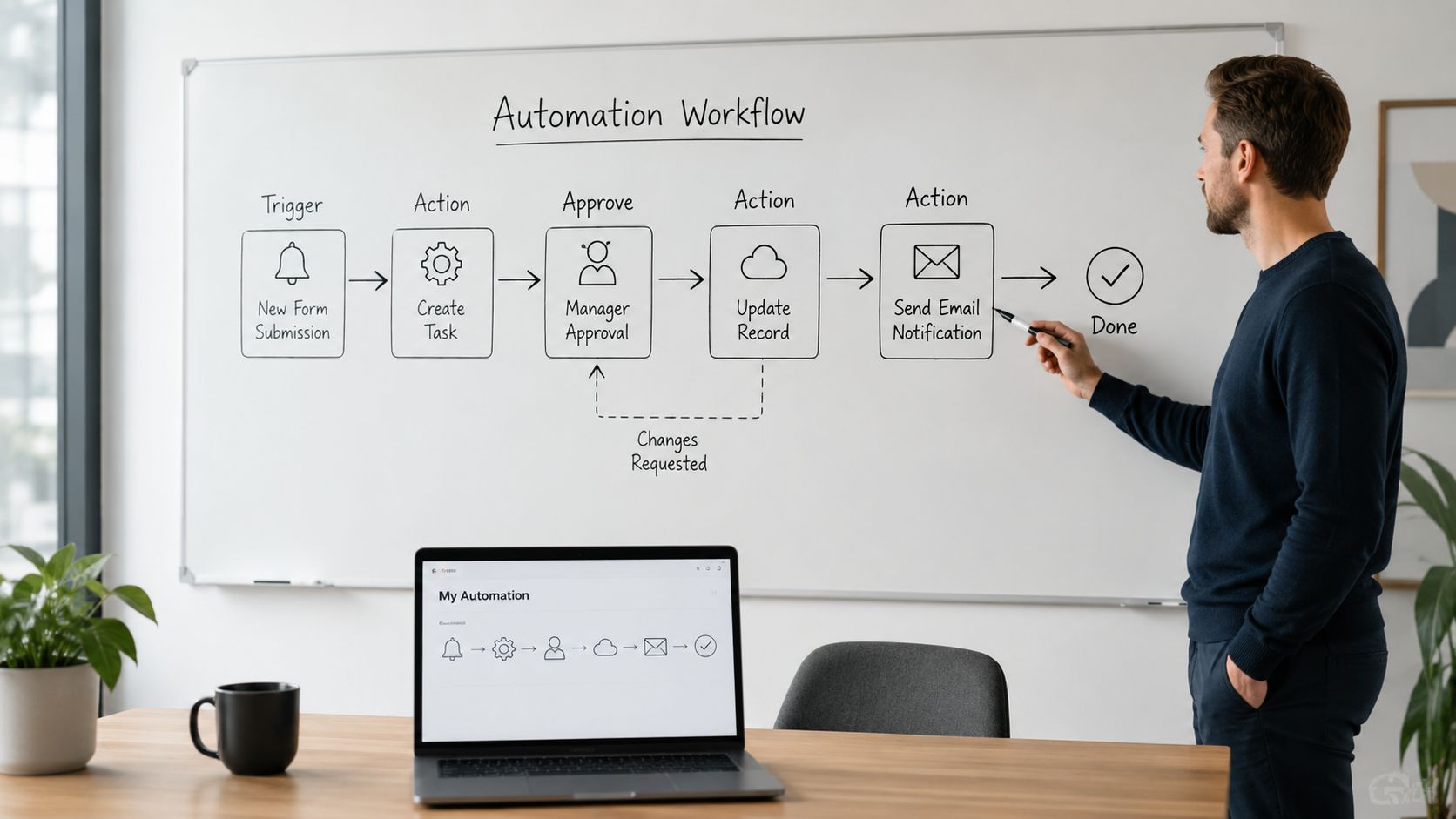
Use platforms like Zapier, Make, or n8n to connect tools without custom code. Before automating, document the process visually so bottlenecks are obvious. Then compare time-to-complete, error rate, and cost per cycle before and after the change.
A good EA also builds a shared automation library. That way, the organization doesn't lose the improvement when the person who built it is busy or unavailable. Frontline teams should be part of this work because they know where the friction really is.
Practical rule: If a process keeps breaking, treat it as a system problem before you treat it as a people problem.
The strategic ladder becomes visible. Tactical EAs keep things moving. Systems-oriented EAs make work easier for everyone around them. That's the difference between being useful today and becoming indispensable over time.
| Function | Implementation complexity 🔄 | Resource requirements & skills ⚡ | Expected outcomes 📊 | Ideal use cases 💡 | Key advantages ⭐ |
|---|---|---|---|---|---|
| Master Calendar and Schedule Management | 🔄 Medium–High, multi‑timezone rules and constant adjustments | ⚡ Calendar tools (Google/Fantastical), time‑zone apps, assertive scheduling, attention to detail | 📊 Fewer conflicts; improved meeting efficiency; protected deep‑work time | 💡 Executives with U.S. + LATAM stakeholders; heavy meeting loads | ⭐ Maximizes same‑day overlap; prevents burnout; improves focus |
| Strategic Communication and Stakeholder Management | 🔄 High, tone, prioritization, and confidentiality demands | ⚡ Strong writing, bilingual EN/ES, stakeholder maps, templates, discretion | 📊 Clearer messaging; fewer misalignments; stronger relationships | 💡 Investor/board communications; cross‑border teams; sensitive negotiations | ⭐ Saves executive time; reduces miscommunication; strengthens trust |
| Project and Initiative Coordination | 🔄 High, dependencies and cross‑functional alignment | ⚡ PM tools (Asana/Notion), RACI, timeline tracking, escalation authority | 📊 Higher on‑time/on‑budget delivery; transparency; less rework | 💡 Product launches, fundraising, office moves, company-wide initiatives | ⭐ Frees exec bandwidth; drives execution and accountability |
| Executive‑Level Research and Insight Synthesis | 🔄 Medium, continuous curation and vetting of sources | ⚡ Research feeds (Feedly/Substack), analytic skills, templated briefings | 📊 Faster, better-informed decisions; early risk/opportunity detection | 💡 Board prep, strategy reviews, market/competitive intelligence (incl. LATAM) | ⭐ Delivers concise, actionable insights; saves executives 5+ hrs/week |
| Financial and Budget Management Support | 🔄 Medium, accuracy and compliance critical | ⚡ Accounting tools (QuickBooks/Expensify), financial literacy, vendor mgmt | 📊 Improved budget visibility; reduced leakage; faster procurement cycles | 💡 Cash‑conscious startups, expense‑heavy teams, vendor negotiations | ⭐ Tightens fiscal controls; catches anomalies; speeds approvals |
| People Operations and Culture Leadership | 🔄 High, politically sensitive and coordination‑intensive | ⚡ ATS (Greenhouse), onboarding systems, event planning, DEI know‑how | 📊 Better onboarding and retention; stronger remote culture; engagement gains | 💡 Distributed teams, nearshore integrations, rapid hiring phases | ⭐ Strengthens culture across regions; accelerates hiring and retention |
| Chief of Staff and Strategic Advisory Functions | 🔄 Very High, strategic scope, confidentiality, and influence | ⚡ Business acumen, analytics, board experience, executive judgment | 📊 Higher‑quality strategy and execution; leadership continuity; risk mitigation | 💡 CEOs needing a strategic extension; board relations; org redesigns | ⭐ High‑impact partner; elevates decision quality; drives strategic initiatives |
| Systems Thinking and Operational Optimization | 🔄 High, mapping, automation, and change management | ⚡ Automation platforms (Zapier/Make), documentation, KPI tracking, tech literacy | 📊 Reduced manual work; lower operational cost; scalable processes | 💡 Startups scaling operations; repetitive workflows needing automation | ⭐ Increases efficiency; builds institutional memory; reduces headcount growth |
The eight core goals are calendar and schedule management, strategic communication and stakeholder management, project and initiative coordination, executive-level research and insight synthesis, financial and budget support, people operations and culture, Chief of Staff and strategic advisory work, and systems thinking and operational optimization.
With outcome KPIs, not activity counts: reclaimed executive hours, on-time delivery (for example, 48 of 50 tasks on time is 96%), scheduling accuracy (40 booked with 1 correction is 97.5%), resolution time, and stakeholder satisfaction.
Pick one goal per rung and make it measurable this quarter, for example: protect two hours of daily focus time on the executive's calendar, deliver a weekly one-page research brief, and cut expense-approval turnaround to under 24 hours.
An EA protects the executive's time and coordination; a Chief of Staff helps shape decisions. Many high-performing EAs grow into Chief of Staff work as the executive starts relying on their judgment, not just their execution.
If you need same-day time-zone overlap and bilingual communication without adding local hiring complexity, a nearshore EA is a strong fit. Virtustant places vetted LATAM executive assistants on a managed model, with a 48-hour shortlist, an all-in rate from $8.50/hr, and a lifetime replacement guarantee.
Achieving strong executive assistant goals isn't about piling on more tasks. It's about moving up a strategic ladder, one layer at a time. Calendar control gives you a base. Communication sharpens your influence. Project coordination gives you ownership. Research, financial support, people ops, advisory work, and systems thinking turn you into a real operator.
The mistake many EAs make is trying to leap straight to strategic work without proving they can handle the fundamentals. That usually backfires. The better path is to master one layer, then use that credibility to expand into the next. A calendar that protects focus, an inbox that surfaces the right priorities, and a project system that keeps work moving are not small wins. They're proof that you can already think beyond admin.
That's where measurement matters. The KPI mindset from earlier, reclaimed executive hours, scheduling accuracy, on-time delivery, and reduced friction, gives you a language for impact that executives understand. It also helps you advocate for your own growth because you can show how your work changed the business, not just the day.
For companies building this capability faster, nearshore talent can be a practical route. U.S. teams often need same-day overlap, bilingual communication, and support that can scale without adding local hiring complexity. Virtustant fits that model by connecting U.S. companies with vetted professionals across LATAM for remote roles, including executive assistants, with sourcing, assessment, placement, and managed HR support built into the service structure.
If you're an EA, pick one goal from each of the first three rungs and make them measurable this quarter. If you're hiring for this role, choose someone who can protect time, communicate clearly, and improve the system, not just keep up with the inbox. The EAs who grow fastest are the ones who start thinking like operators before anyone gives them the title.
If you're ready to hire or upgrade your executive support, visit Virtustant to see how nearshore executive assistant staffing can help you protect executive time, tighten coordination, and build a more strategic support function. Explore the executive assistant role or book a discovery call to see whether a nearshore model fits your team's support goals.