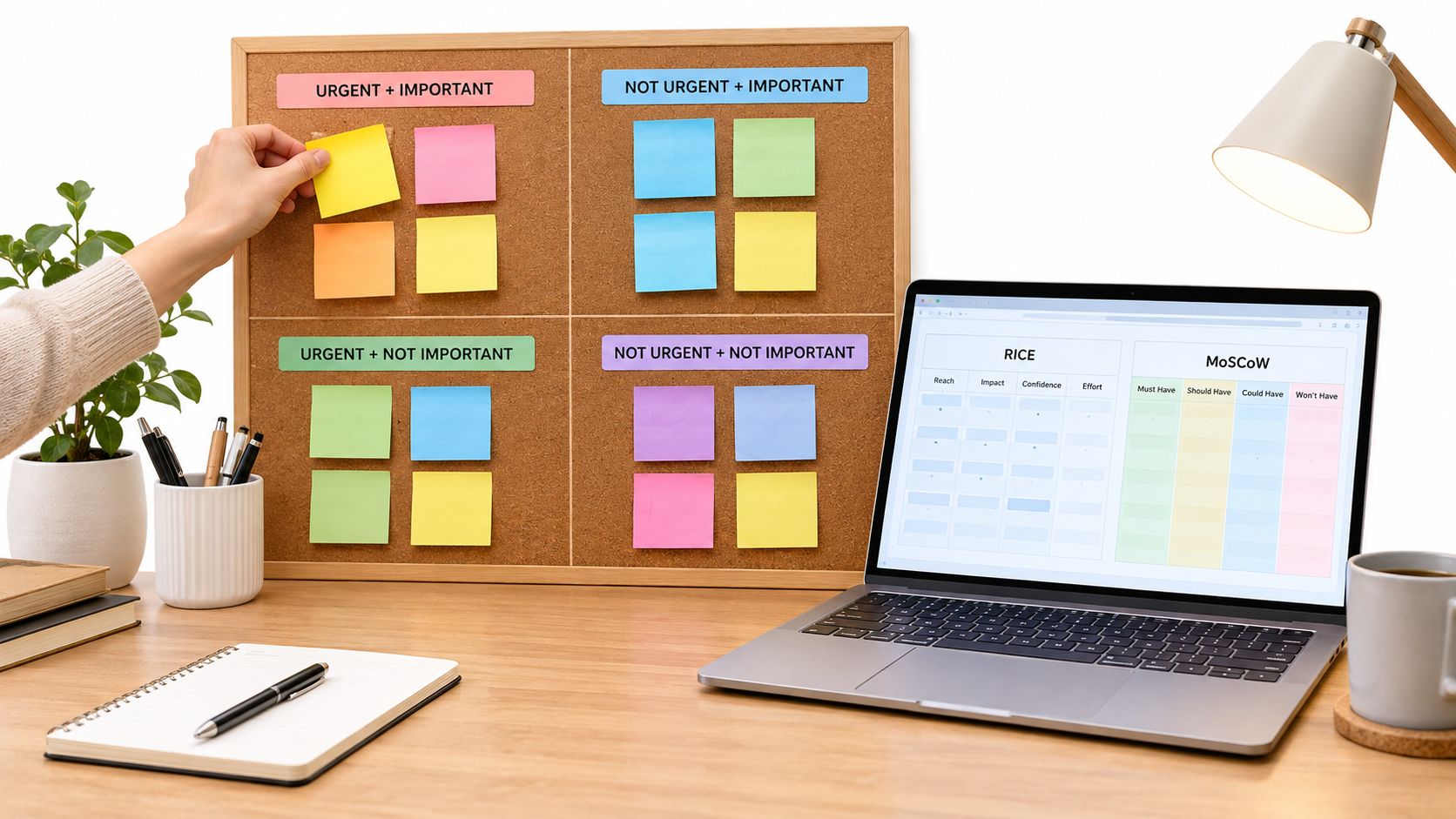
10 Executive Assistant Skills Employers Should Assess
August 24, 2026


The strongest executive assistants combine operational hard skills, including calendar, communication, project, data, and meeting systems, with judgment-based skills such as discretion, stakeholder management, initiative, and problem-solving. Employers should test both through work samples, not rely on interview claims alone.
That standard matters because the role now sits between administration and operations. The U.S. Bureau of Labor Statistics reports that more than basic people skills are required for 95.9% of executive secretaries and executive administrative assistants, while job-posting analysis identifies communication, detail orientation, scheduling, Microsoft Office, and Excel as recurring requirements in executive assistant listings. BLS occupation data supports a practical conclusion: the right hire must execute reliably inside digital systems and make sound decisions when instructions are incomplete.
This article uses three layers, Transactional, Operational, and Strategic, to connect each skill to observable tasks, hiring evidence, and executive influence. It's written for U.S. founders and hiring leaders evaluating whether a remote professional can collaborate across U.S. time zones, not merely complete a task list.
Operator insight: The best assessment asks candidates to produce the work the role will require.
For further operating guidance, read the latest articles.
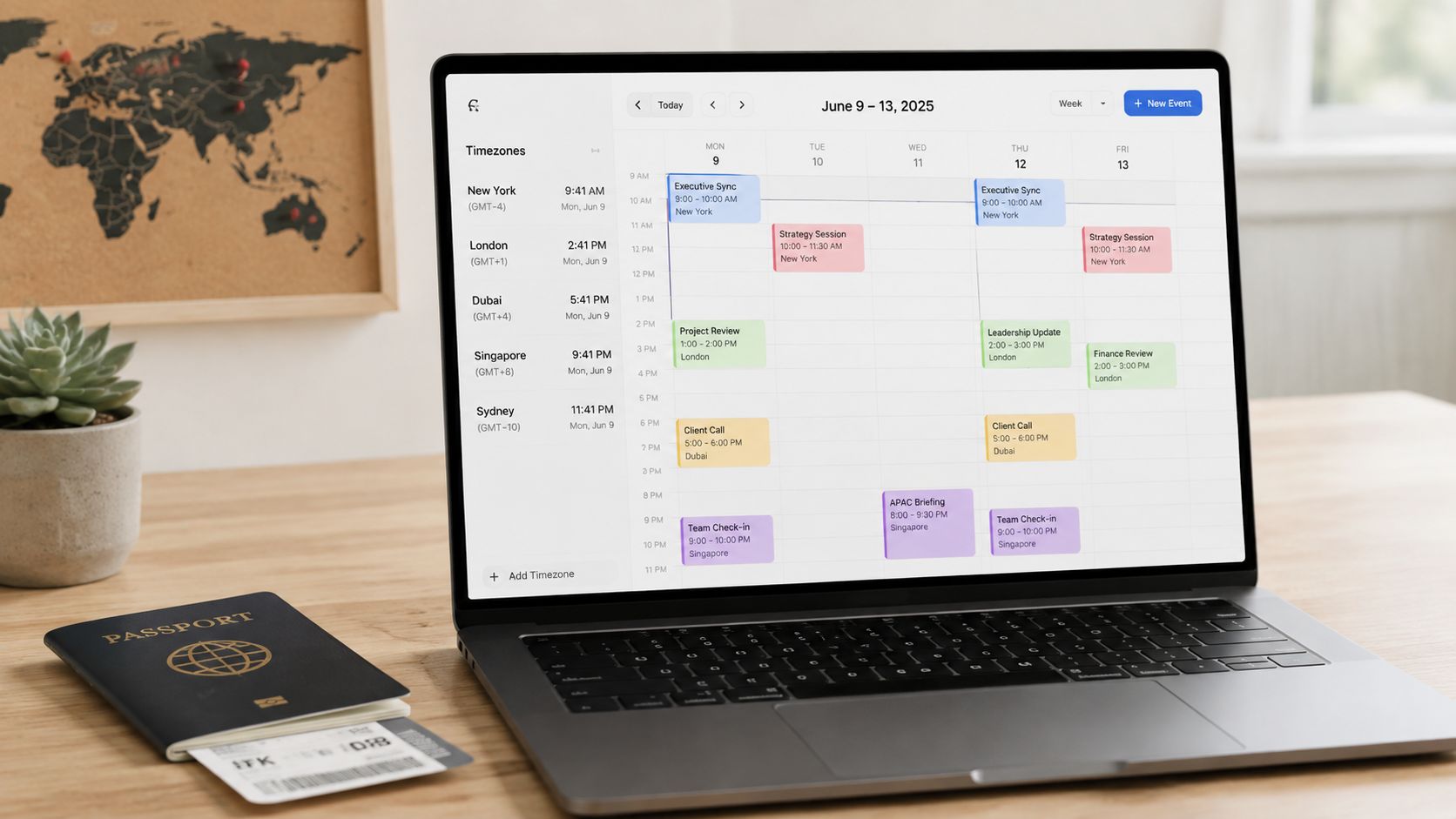
Calendar management is a judgment system disguised as administration. A capable assistant doesn't fill available slots. They weigh executive priorities, attendee importance, preparation time, travel constraints, time-zone overlap, and the cost of interrupting focused work.
The work sample should present competing requests across U.S. and LATAM calendars. Ask the candidate to protect recurring strategy and deep-work blocks, batch one-on-ones into Tuesday and Wednesday mornings, and propose an alternative when a meeting conflicts with a higher-priority commitment. A practical test might ask whether a meeting at 2 p.m. EST should move to 12 p.m. EST to improve overlap, then require the candidate to explain the decision.
Travel exposes the same skill under pressure. A strong remote professional can plan a 10-city fundraising tour with coordinated bookings, briefing materials, ground transportation, and vendor communication. They can also handle a cancelled flight by presenting a rebooking option, revised ground transport, and an updated itinerary instead of forwarding the problem to the executive.
Use recurring calendar blocks for strategy, build a buffer before accepting new requests, and create an attendee decision tree with the executive. For nearshore teams, place standups at overlap edges, such as early EST and mid-morning LATAM, so collaboration remains practical without extending the workday unnecessarily.
An executive assistant's written communication becomes part of the executive's operating voice. The assessment should therefore test more than grammar. It should reveal whether the candidate can identify what requires a decision, preserve tone, reduce ambiguity, and draft messages that recipients can act on.
Give candidates a simulated inbox with requests divided into FYI, decision needed, and action required. Ask them to triage the messages, draft a response to a routine request, prepare a sensitive customer apology, and produce a short executive memo. The strongest submission will make priorities visible and avoid unnecessary revision loops.
This capability is especially important for distributed teams. A remote professional can prepare overnight drafts so a U.S. executive opens a curated inbox rather than a backlog. That workflow only works when the assistant knows the executive's preferences, escalation thresholds, and communication style.
Create a written style guide with approved examples, recurring phrases, preferred levels of formality, and topics that require executive review. A small, anonymized voice bank can help the assistant draft consistently, but templates shouldn't replace judgment. A customer apology, for example, must balance empathy with policy and shouldn't promise an outcome the company can't deliver.
Assess the candidate with the same kind of executive assistant goal setting that will govern the role after hiring. Score clarity, tone, accuracy, prioritization, and whether the response moves the issue forward. The ability to write well is measurable, and executive assistant assessment criteria specifically include written and verbal communication, problem-solving, and time and task management.

Project coordination is where an assistant starts converting executive intent into predictable execution. The role may involve product launches, hiring initiatives, customer events, board preparation, or several of these at once. The core test isn't whether a candidate can update a project tool. It's whether they can maintain a reliable view of dependencies and surface risk before a deadline becomes a crisis.
Ask the candidate to manage a fictional product launch across engineering, design, and marketing. Provide one delayed design deliverable, a fixed launch date, and conflicting dependencies. Require a revised task inventory, a risk summary, and a recommendation. A capable candidate will identify the two-week design delay, explain its downstream effect, and propose a mitigation instead of merely changing a status label.
Use one project system and standardize it. Whether the team uses Asana, ClickUp, Monday.com, or another platform matters less than whether the assistant maintains clear owners, deadlines, dependencies, and escalation notes. A rolling 90-day roadmap can also reveal over-allocation before the founder needs to hire again.
A weekly 15 to 20-minute bottleneck review can keep the system current, but asynchronous updates are often better for nearshore collaboration. The assistant should send a concise status note with green, yellow, and red items, the reason for each risk, and the next action. This is the practical value behind our list of tasks to delegate to an executive assistant, where delegation works only when ownership and follow-through are explicit.
A task tracker creates leverage only when it changes what the executive sees and decides.
Assess candidates on completeness, escalation timing, dependency mapping, and the quality of their recommendation. A polished dashboard with missing risks is worse than a simple tracker that tells the truth.
Data, expense, and database work reveal whether an executive assistant can protect decision quality during repetitive operations. Assistants may transfer information across CRM, accounting, expense, and administrative systems, where a minor error can distort reporting or create follow-up work. Hiring teams should test these behaviors directly rather than treating “advanced Excel” or “QuickBooks experience” as sufficient evidence.
A practical assessment can provide a fictional Salesforce export. Ask the candidate to standardize formats, identify duplicates, and document unresolved records. A separate expense sample can require transaction coding, corporate-card reconciliation, and duplicate-invoice detection. The exercise should stay within the role's accounting scope. It should show whether the candidate follows validation rules, records assumptions, and escalates uncertainty instead of guessing.
Batch processing can reduce context switching, conditional formatting can expose inconsistencies, and spot checks can protect database hygiene. For U.S. teams working with vetted LATAM remote professionals, the assessment should also clarify multi-currency rules, handoff timing, and ownership of unresolved records.
Candidates who can explain deduplication, reconciliation, and migration demonstrate operational control, not just familiarity with software. For recurring support across CRM, expenses, and administrative workflows, review virtual assistant services only after testing the actual systems and review standards the role requires.
Meetings generate value only when decisions survive after the call ends. An executive assistant should prepare the agenda, capture decisions in real time, assign owners and deadlines, and distribute a concise record that supports follow-through.
Give the candidate a recording or written scenario from a planning meeting and ask for a one-page executive summary. The output should separate decisions, action items, risks, assumptions, and unresolved questions. It shouldn't reproduce every comment. A strong candidate will identify what changed, who owns the next move, and where the executive's intervention is required.
Use a standard template with four sections:
The assistant should assign action items during the meeting, not reconstruct ownership from memory afterward. Summaries should go out within 24 hours, with overdue items tracked through the next leadership meeting. For nearshore teams, overnight distribution gives LATAM colleagues useful context before their morning begins.
The assessment can include a live note-taking exercise, followed by a request to turn raw notes into an executive brief. Evaluate whether the candidate distinguishes discussion from decision and whether the summary is usable without a second explanation. A modern meeting minutes workflow can accelerate transcription, but the assistant still owns interpretation, accuracy, and follow-up.

Stakeholder management extends the executive's reach without pretending the assistant is the executive. The remote professional needs to know which relationships require regular contact, which issues deserve escalation, and how each stakeholder prefers to receive information.
A useful assessment gives the candidate a relationship map with board members, investors, vendors, clients, and internal leaders. Ask them to design communication cadences, prepare a touchpoint plan, and explain what they would escalate. The answer should account for sensitivity and context, not just assign everyone the same monthly email.
A candidate might be asked to handle a strained vendor relationship before renewal. Look for a plan that acknowledges the issue, gathers facts, protects the executive's position, and creates a path toward resolution. The candidate should know when to coordinate directly and when the executive must enter the conversation.
The role can also include investor calendar management, briefing materials, and informal touchpoints between formal meetings. Those tasks require consistency and discretion. A relationship map should record preferences, communication history, sensitivities, and next actions, but access must remain appropriately limited.
For U.S. teams working with LATAM professionals, cultural fluency is practical rather than ornamental. The assistant can help align expectations around response windows, meeting styles, documentation, and escalation. That reduces friction when people interpret urgency or silence differently.
Score the work sample on anticipation, tone, escalation judgment, and follow-through. Strong stakeholder managers don't create dependency around themselves. They make interactions clearer, more timely, and less costly for the executive.
Research becomes valuable only after someone converts information into a decision aid. An executive assistant doesn't need to deliver an exhaustive link list. They need to define scope, distinguish verified information from interpretation, surface uncertainty, and explain why a finding matters.
Ask candidates to compare potential partners, competitors, conference venues, or market segments using a defined source set. Require a short recommendation, a comparison summary, and a list of open questions. The candidate should state what they know, what they infer, and what still requires executive judgment.
A research library organized by topic helps preserve institutional knowledge. Source quality should be agreed before the assignment starts, especially when the work may inform board materials, hiring, or expansion decisions. Tools such as Semrush, SimilarWeb, and Apollo may assist with gathering information, but they don't eliminate the need to verify records and explain limitations.
A strong candidate can also use relevant LATAM knowledge when a U.S. company evaluates regional expansion, partnerships, or hiring. That local context can improve the questions the executive asks, but it shouldn't be presented as certainty without evidence.
The work sample should be time-bounded and narrow enough to evaluate reasoning. Score structure, source discipline, accuracy, confidence labeling, and actionability. A concise brief that changes the next conversation is more useful than a long document that leaves the executive to perform the synthesis.
Discretion is a gatekeeping skill. Executive assistants may handle fundraising plans, financial results, personnel decisions, board discussions, acquisition logistics, and investor communication. The employer must know whether the candidate understands access boundaries before granting access.
Don't test confidentiality with a theatrical trick. Use scenario questions and reference verification. Ask what the candidate would do if a colleague requested board materials without clear authorization, if a family member asked about a confidential meeting, or if an AI tool appeared convenient for summarizing sensitive documents. The answer should show restraint, verification, and a willingness to ask before acting.
The assistant should coordinate acquisition logistics without disclosing the underlying discussion. They should also avoid casual references to executive schedules, internal tensions, compensation, or client information.
Confidentiality is hard to infer from charm or confidence. Review how candidates describe prior employers. Careful professionals explain their responsibilities without exposing private details. A multi-stage process that includes experience and reference verification gives hiring leaders another evidence point, but the day-to-day system still needs explicit permissions and clear norms.
Initiative means improving the operating system without creating unauthorized change. A proactive executive assistant notices recurring reschedules, unclear handoffs, repeated manual entry, and meeting follow-up gaps. They identify the cause, propose a contained test, and report the result.
Ask the candidate to review a fictional workflow with recurring calendar conflicts, late board-material assembly, or fragmented expense receipts. Require a short diagnosis and a two-week experiment. The candidate should explain what they would change, what could go wrong, and what evidence would determine whether to keep the change.
Examples include consolidating recurring reschedules into a fixed block, creating a Notion template for board materials, or introducing receipt scanning for expense categorization. These are useful only if the assistant verifies that the change improved reliability and didn't introduce a new risk.
The assessment should reward clear reasoning, not grand proposals. A candidate who recommends a modest workflow experiment with explicit safeguards may be more valuable than one who promises sweeping automation without understanding the data or stakeholders involved.
Assistants report low confidence in public speaking, speaking up in meetings at 35.3%, assertiveness at 27.9%, and conflict resolution at 27.4%, while nearly 40% want training on effective AI prompts, according to Office Dynamics' administrative training needs survey. That evidence points to a trainable gap: employers should test initiative through structured scenarios and coach the behaviors behind “strategic partnership.”
The three-layer model separates execution from skill application.
Transactional skills produce accurate outputs. Calendar changes, inbox triage, expense coding, meeting notes, and database updates belong here. They're essential, but they're easiest to assess with bounded work samples and clear accuracy standards.
Operational skills connect outputs into workflows. Project coordination, travel systems, stakeholder cadences, meeting follow-up, and data hygiene keep the executive's priorities moving across people and tools. These skills create significant value because they reduce rework and prevent the executive from becoming the system of record.
Strategic skills shape decisions and protect attention. Discretion, research synthesis, initiative, prioritization, and judgment allow the assistant to act with less direction while knowing when escalation is necessary.
A first hire may need strong transactional reliability and enough operational discipline to manage a calendar, inbox, and task system. A founder with a complex investor schedule may need deeper stakeholder management and discretion. A scaling company may benefit more from project coordination and data control than from presentation polish.
Nearshore staffing for U.S. companies can make sense when same-day collaboration and U.S. time-zone overlap are part of the job design. The trade-off is that time-zone alignment doesn't replace onboarding, documentation, or judgment testing. It makes live collaboration easier when the professional has already demonstrated the required skills.
Virtustant's model covers sourcing, assessment, placement, contracts, payroll, HR, compliance, account management, and a replacement guarantee with no time cap. Its vetting runs four stages: a live English screen, a cognitive assessment, a role-specific skills test, and experience or reference verification. The top 1% figure describes the acceptance rate that funnel produces, not a single test or a claim about the talent pool. Against a comparable U.S. hire, nearshore staffing can save up to 70%. For U.S. companies comparing remote options, the operating question is whether the process produces evidence that matches the assistant's actual workload.
The table below is a planning aid, not a scorecard. Difficulty ratings reflect how hard each skill is to assess and build, and the outcomes column describes the kind of result to expect rather than a guaranteed number.
| Skill | Difficulty to assess | What it needs in place | What good looks like | Best fit | One thing to do first |
|---|---|---|---|---|---|
| Calendar, schedule and travel coordination | High, multi-timezone planning under real-time change | Calendar access, booking platforms, vendor contacts, agreed priorities | Focus blocks survive the week; conflicts resolved without escalation | Executives with heavy travel or multi-region teams | Agree an attendee decision tree with the executive |
| Written communication and email management | Medium, learning the executive voice takes time | Inbox access, style guide, approved examples, escalation thresholds | Executive opens a curated inbox, not a backlog; fewer revision loops | Leaders with high inbound volume | Build a written style guide with real examples |
| Project and task coordination | Medium, needs cross-team buy-in | One project tool, dependency map, reporting cadence | Risks surface before deadlines; one source of truth | Cross-functional launches and roadmaps | Standardize on one tool and stop duplicating trackers |
| Data, expense and database management | Medium, accuracy-critical and repetitive | CRM and accounting access, reconciliation rules, validation checks | Clean reporting; exceptions flagged rather than guessed | Companies needing reliable CRM or finance data | Write the validation checklist before granting access |
| Meeting facilitation and minutes | Low to medium, mostly process discipline | Agenda and note templates, action tracker | Decisions and owners survive the call; summaries inside 24 hours | Board meetings and leadership planning | Adopt one four-section note template |
| Stakeholder management | High, long-term interpersonal work | Relationship map, documented preferences, escalation rules | Issues surface early; the assistant reduces friction rather than creating dependency | Board, investors, key vendors and clients | Set cadences per stakeholder, not one blanket email |
| Research and competitive intelligence | Medium, requires source judgment and synthesis | Agreed source set, summary template, defined scope | A brief that changes the next conversation, with confidence labelled | Market entry, pricing, competitor monitoring | Define scope and source quality before the assignment |
| Discretion and confidentiality | Very high, judgment cannot be inferred from confidence | Password manager, access controls, NDAs, explicit norms | Sensitive work coordinated without disclosing the underlying discussion | Fundraising, M&A, sensitive personnel or board matters | Grant access by role, and default to treating unclear data as sensitive |
| Problem-solving and initiative | High, involves analysis and change management | Baseline metrics, process documentation, room to pilot | Contained two-week tests with evidence, not sweeping proposals | Teams with recurring bottlenecks | Record the baseline before changing anything |
| Three-layer framework and nearshore fit | Low to medium, mostly a design decision | Staffing partner, skills assessments, bilingual talent, overlap design | The hire matches the operating need rather than a generic job description | U.S. companies designing an EA role from scratch | Decide which layer the role must own before sourcing |
A skills list is only useful when it changes the hiring decision. Start by documenting the executive's recurring workload, including calendar volume, travel complexity, inbox expectations, project dependencies, meeting cadence, data systems, sensitive information, and the decisions the assistant may make without approval.
Then select work samples that mirror those conditions. One candidate might receive a scheduling conflict with travel constraints. Another might triage an inbox, draft a response, update a task tracker, reconcile a small expense file, summarize a meeting, handle a confidentiality scenario, and propose a workflow improvement. The samples don't need to be long. They need to be realistic enough to expose prioritization, accuracy, clarity, judgment, and follow-through.
The assessment should distinguish hard skills from soft skills without treating soft skills as unmeasurable. Calendar accuracy is a hard-skill output. Prioritization is a judgment behavior. A candidate can demonstrate both in the same scheduling scenario.
The next step is simple. Write the seven work samples before you publish the role, then require every finalist to complete the same exercises. That process will tell you more about executive assistant skills than a longer job description or another unstructured interview. For broader hiring design, compare your process with structured interview prompt practices, especially the use of observable evidence rather than self-report.
Start with written communication, calendar judgment, organizational discipline, discretion, and the ability to manage tasks inside the tools your company already uses. Job-market evidence supports testing communication, detail orientation, scheduling, Microsoft Office and Excel, because those recur across executive assistant listings. Independent job-posting analysis also identifies administrative support, travel arrangements, project management, workflow management and Google Workspace as part of the broader role.
Use confidentiality scenarios, access-control exercises, reference checks and a workflow-improvement assignment. Watch whether the candidate asks before sharing sensitive information, separates facts from assumptions, and proposes a contained test instead of an expansive change. Also listen to how they describe past employers: careful professionals explain their responsibilities without exposing private details.
Hard skills produce a checkable output, such as an accurate calendar, a clean data file or a correct expense reconciliation. Soft skills are judgment behaviors, such as prioritization, escalation timing and tone. The distinction matters less than people assume, because a single scheduling scenario can surface both at once. Treating soft skills as unmeasurable is what leads teams back to unstructured interviews.
Give the candidate competing requests instead of an empty calendar. Include a fixed strategy block, a customer escalation, a travel constraint and a meeting that could move. Then require a written explanation of the trade-off. Anyone can book an open slot; the signal is whether they protect focus time and can defend the sequence they chose.
Around seven, kept short. Calendar judgment, written communication, project coordination, data accuracy, meeting documentation, a confidentiality scenario and a workflow-improvement proposal cover the role without turning the process into unpaid work. Score every finalist on the same rubric, and write the samples before the role is published so they reflect the job rather than the candidate in front of you.
Nearshore support fits when the role benefits from overlapping work hours, clear written handoffs and regular live collaboration. It is not a substitute for defining decision rights or testing English communication, tool proficiency and judgment. Time-zone alignment makes live collaboration easier; it does not create the skills.
The transactional layer is the most exposed, and the World Economic Forum's Future of Jobs work has projected declines in clerical and secretarial roles this decade. That is a reason to assess differently rather than to skip the hire: test how a candidate combines automation with human verification, and weight the operational and strategic layers, which are the parts a tool does not cover.
Virtustant connects U.S. companies with vetted remote professionals across Latin America for executive assistant and other support roles, including sourcing, assessment, placement, contracts, payroll, HR, compliance, account management, and a replacement guarantee with no time cap. Visit Virtustant to review a nearshore hiring option built around practical skills evidence and U.S. time-zone collaboration.